Grounding & Earthing
The safety connection that ties electrical systems to the earth — protecting people from electric shock and giving fault current a safe path so protective devices trip. From grounding vs earthing, the earth-fault loop and types of earthing, to TN/TT/IT systems, earth resistance and the earth pit.
Complete Learning Path — Grounding & Earthing
From what earthing is and why it protects you, to types, systems, earth resistance and the earth pit
What is Earthing?
Earthing (or grounding) is the deliberate connection of the metal parts of an electrical installation — and the supply neutral — to the general mass of the earth through a low-resistance path. Its first job is safety: if a live wire touches a metal casing, earthing carries the fault current away instead of letting it pass through anyone who touches it.
The connection is made with an earth conductor (the green/yellow wire) running to a buried earth electrode. Because that path has very low resistance, a fault produces a large current that quickly blows a fuse or trips an MCB / RCCB — and the exposed metal is held safely near earth potential the whole time.
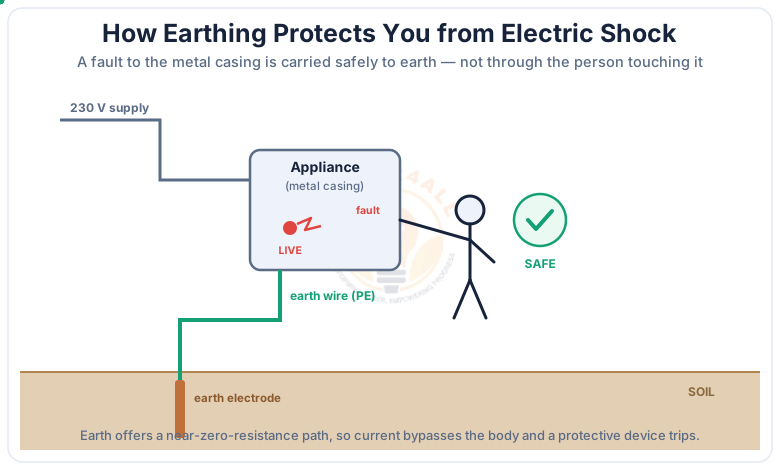
Earth wire carries no current normally
In healthy operation the earth conductor carries no current — it only comes alive during a fault. That is what makes exposed metal safe to touch every other moment.
Grounding vs Earthing (and System vs Equipment)
The two words cause endless confusion, but the rule is simple: "earthing" and "grounding" mean the same thing — they are just regional terms.
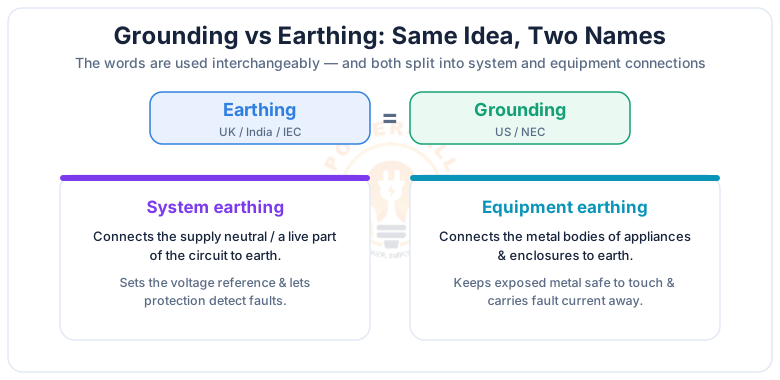
| Term | What is connected to earth | Purpose |
|---|---|---|
| System earthing | The supply neutral / a point of the live circuit | Voltage reference; lets protection detect faults |
| Equipment earthing | Metal bodies of appliances & enclosures | Keeps exposed metal safe; carries fault current |
Earth is not the neutral
The neutral carries the normal return current of the circuit; the earth conductor is a safety path that normally carries none. They are connected together only at the source, never mixed at the load in a modern installation.
Why We Earth: The Five Jobs
Earthing does far more than one thing. Here are the reasons every installation is earthed.
Shock protection
Keeps exposed metal near earth potential so it is safe to touch, even during a fault.
Fault-current path
Gives fault current a low-resistance route so fuses, MCBs and RCCBs trip fast.
Voltage reference
Fixes the system's zero-volt reference, stabilising line voltages.
Surge & lightning
Drains lightning and switching surge energy safely to ground.
Static & noise
Bleeds off static charge and gives sensitive electronics a clean reference.
Equipment protection
Limits touch voltages and protects insulation and equipment from damage.
The Earth-Fault Current Loop
To see how earthing trips a breaker, follow the earth-fault loop — the complete circle fault current travels when a live wire touches earthed metal.
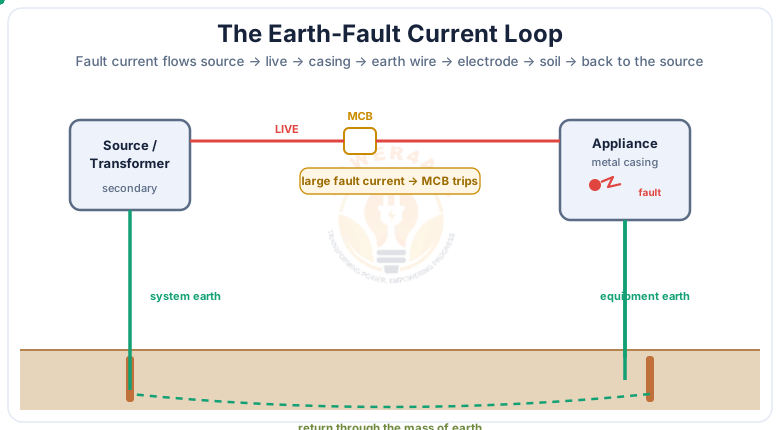
Ifault = V / Zloop
The lower the earth-fault loop impedance Zloop, the larger the fault current and the faster protection operates
Worked example
A 230 V circuit has an earth-fault loop impedance of 1.15 Ω.
Fault current I = 230 / 1.15 = 200 A — hundreds of times the normal load, so a 16 A MCB trips almost instantly. If the loop impedance were high (poor earth), the current might be too small to trip, which is exactly why low earth resistance matters.
Types of Earthing
The earth electrode is what actually makes contact with the soil. The three classic methods are plate, pipe and rod earthing.
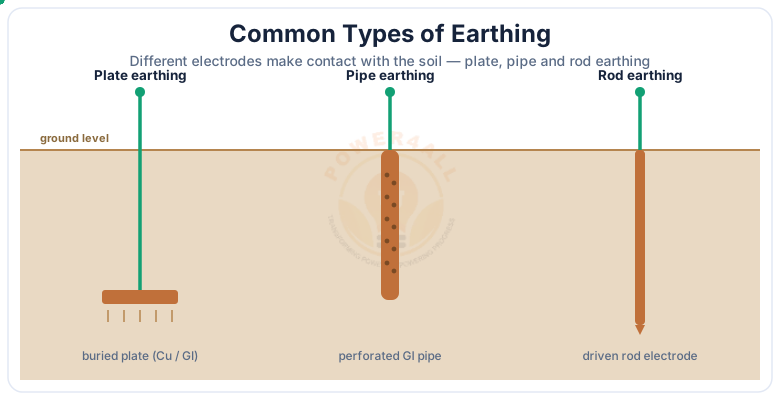
Plate earthing
A copper or GI plate buried vertically in a pit with charcoal and salt. Large contact area, low resistance.
Pipe earthing
A perforated GI pipe driven into the ground — the most common domestic method in India.
Rod earthing
A copper-bonded rod driven deep; several rods can be linked to reach a low resistance.
Strip / wire earthing
A long buried strip or wire, used where soil resistivity is high or space is limited.
Earthing Systems: TN, TT & IT
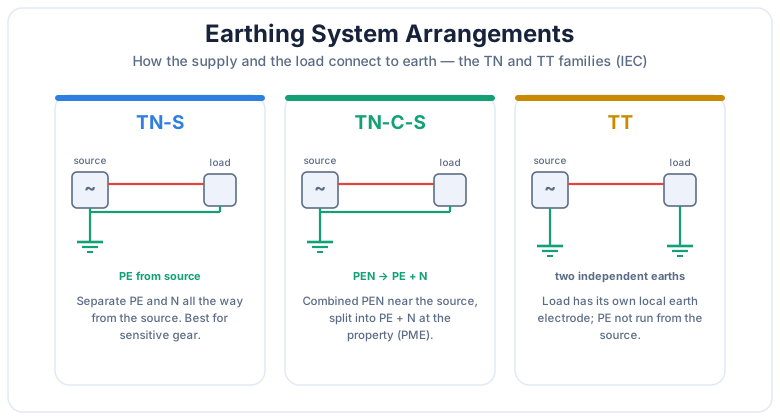
The earthing system describes how the supply and the load each connect to earth. The IEC names them with letter codes.
| System | Earth arrangement | Notes |
|---|---|---|
| TN-S | Separate PE and N from source to load | Clean earth; good for sensitive equipment |
| TN-C-S | Combined PEN near source, split to PE + N at the property | Common utility supply (PME) |
| TT | Load has its own local earth electrode | Common in rural / older supplies; usually needs an RCCB |
| IT | Supply isolated or earthed via high impedance | Hospitals, industry — keeps running on a first fault |
The first letter is the supply's earthing (T = directly to earth, I = isolated); the second is the installation's exposed metal (T = own electrode, N = via the supply's earthed conductor).
Earth Resistance & the Earth Pit
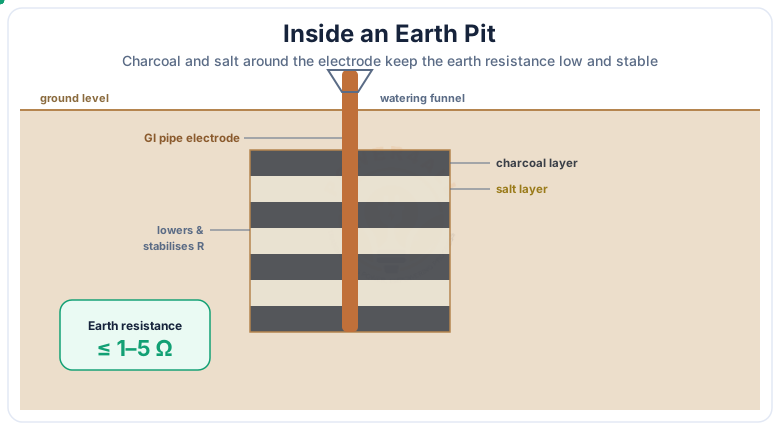
For earthing to work, the electrode's resistance to the surrounding soil must be low and stable. That is achieved with a well-built earth pit.
Soil resistivity
Wet, salty clay conducts well; dry, rocky or sandy soil has high resistivity.
Moisture & salt
Charcoal and salt keep the soil damp, so resistance stays low even in summer.
Depth & size
Deeper, larger or multiple electrodes reach moist soil and lower the resistance.
Measurement
Tested with an earth resistance tester (earth megger) by the fall-of-potential method.
Target values
Domestic installations aim for ≤ 5 Ω; substations and sensitive systems aim for ≤ 1 Ω. The lower the resistance, the larger the fault current and the faster the protection.
Where Earthing Matters
Every installation is earthed, but some settings demand special care.
Homes
Every socket, appliance and metal enclosure is earthed for shock protection.
Industry
Motors, panels and machine frames are earthed and bonded against faults and static.
Hospitals
IT earthing keeps critical equipment running on a first fault; strict touch-voltage limits.
Substations
Large earth grids limit step and touch voltages during faults and lightning.
Electronics & IT
Clean signal earths and bonding prevent noise, ground loops and data errors.
Solar & EV
PV arrays and EV chargers need careful earthing and RCD protection for DC faults.
Key Terms at a Glance
The essential earthing vocabulary students and electricians search for.
Earth electrode
The conductor buried in soil (plate/pipe/rod).
PE conductor
Protective earth — the green/yellow wire.
System earthing
Earthing the supply neutral.
Equipment earthing
Earthing appliance metal bodies.
Earth resistance
Electrode-to-soil R; aim ≤ 5 Ω.
Bonding
Linking metalwork to the same potential.
Frequently Asked Questions
Quick, clear answers to the questions people ask most about grounding and earthing.
What is earthing (grounding) in electrical systems?
Earthing, also called grounding, is connecting the metal parts of an installation and the supply neutral to the general mass of the earth through a low-resistance conductor and an earth electrode. It protects people from shock, gives fault current a safe path so protection trips, and provides a stable voltage reference.
What is the difference between grounding and earthing?
They mean the same thing. Earthing is used in the UK, India and IEC standards; grounding is used in the US (NEC). Both further divide into system earthing (earthing the supply neutral) and equipment earthing (earthing appliance metal bodies).
What is the difference between earthing and the neutral wire?
The neutral is a current-carrying conductor that returns normal load current to the source. The earth (PE) conductor normally carries no current and exists only for safety — it connects exposed metal to earth so a fault trips protection. Neutral is for operation; earth is for protection. They join only at the source.
Why is earthing important?
It protects life and equipment. If a live wire touches a metal casing, earthing carries the fault current to earth instead of through a person, and the large current trips a fuse, MCB or RCCB. Earthing also fixes the voltage reference, drains static and surge energy, and supports lightning protection.
What are the main types of earthing?
Plate earthing (a buried copper/GI plate), pipe earthing (a perforated GI pipe) and rod earthing (a driven rod). Strip or wire earthing uses a long buried conductor. The choice depends on soil, space and the earth resistance you need.
What is the difference between system earthing and equipment earthing?
System earthing connects a point of the supply itself (usually the transformer/generator neutral) to earth for a voltage reference and fault detection. Equipment earthing connects the exposed metal of appliances and enclosures to earth so they stay safe to touch. A safe installation needs both.
What should the earth resistance value be?
Lower is better. A domestic installation aims for about 5 Ω or less; substations and sensitive systems aim for 1 Ω or below. It is measured with an earth resistance tester and depends on soil resistivity, moisture, and electrode size and depth.
What are the TN, TT and IT earthing systems?
They are IEC arrangements. TN connects the load earth back to the source earth: TN-S keeps PE and N separate, TN-C-S combines them as a PEN then splits them (PME). TT gives the load its own local electrode. IT isolates the supply or earths it through a high impedance so it can run on a first fault.
Why are charcoal and salt used in an earth pit?
Alternating layers of charcoal and salt around the electrode lower and stabilise the earth resistance. Charcoal holds moisture and conducts; salt keeps the soil damp and conductive even in dry weather. A watering funnel lets the pit be topped up to keep resistance low.
Does earthing prevent electric shock?
It greatly reduces the risk. By bonding exposed metal to earth through a very low resistance, earthing keeps that metal near earth potential and diverts fault current away from the body, while the large current trips protection. For the fastest protection against small leakage currents, an RCCB or GFCI is used together with earthing.
Conclusion & Key Takeaways
Earthing is the quiet safety system behind every socket: a low-resistance path to the earth that protects people and lets protection work.
Safety first
Diverts fault current away from people.
Grounding = earthing
Same idea, regional names.
System + equipment
Earth the neutral and the metalwork.
Fault loop trips protection
Low Zloop → big current → fast trip.
Plate / pipe / rod
Electrodes in a charcoal-salt pit.
Keep R low
Aim ≤ 1–5 Ω.